Why do some tattoos fade faster than others?
1st of March 2026
A common question in tattoo removal is why one person’s tattoo fades quickly while another person’s takes longer, even when the tattoos appear similar.
Tattoo removal is not only determined by the laser. It is strongly influenced by individual biology and tattoo placement.
Your Immune System
Laser treatment breaks tattoo ink into smaller particles. The body’s immune system, specifically immune cells such as macrophages, then helps remove these particles over time through the lymphatic system.
Individual immune response varies. Factors such as overall health, recovery, stress levels, sleep, and smoking status can influence how efficiently the body clears fragmented ink.
Circulation and Placement
Ink clearance depends on blood flow and lymphatic drainage.
Areas of the body with stronger circulation and more active lymphatic flow often show faster fading. Tattoos located on the chest, upper back, and upper arms commonly respond more efficiently.
Tattoos on the lower legs, ankles, hands, and feet often take longer. These areas are further from the body’s central circulation and major lymphatic regions, and peripheral circulation is generally slower. As a result, fragmented ink may clear more gradually.
This does not mean removal is ineffective in these areas. It simply means patience and proper spacing between sessions are especially important.
Lifestyle Factors
Lifestyle can directly influence circulation, inflammation, and immune efficiency.
Smoking has been associated with slower tattoo removal outcomes. Nicotine constricts blood vessels, which can reduce circulation and impair healing.
Alcohol consumption can also influence results. Regular or heavy alcohol intake may increase systemic inflammation, impair immune efficiency, and affect the body’s ability to recover between sessions. Occasional moderate intake is unlikely to dramatically change results, but consistent excessive drinking may slow overall progress.
Hydration supports circulation and lymphatic flow. Regular physical activity can also support vascular health, which may assist the body’s natural clearance processes.
Sleep is another factor. The immune system performs much of its repair and regulatory work during deep sleep cycles. Poor sleep over long periods may reduce recovery efficiency.
Tattoo Characteristics Still Matter
While biology and lifestyle influence fading speed, the tattoo itself remains a major factor.
Black ink typically responds fastest because it absorbs laser energy most efficiently. Colours like green and blue can be more resistant.
Ink density also plays a role. Heavily saturated professional tattoos contain more pigment, meaning more sessions are usually required for visible fading.
Depth and age matter as well. Older tattoos may respond quicker, while deeper or more densely packed ink can take longer to break down.
Even with similar health and habits, tattoo characteristics alone can create different timelines.
Examples of Visible Fading After One Session
While timelines vary, below are three recent examples where measurable fading occurred after a single treatment.
These cases do not represent guaranteed outcomes. They illustrate how factors such as ink type, placement, and individual biology can produce early visible change.
Case 1: Ankle Tattoo - One Session Result
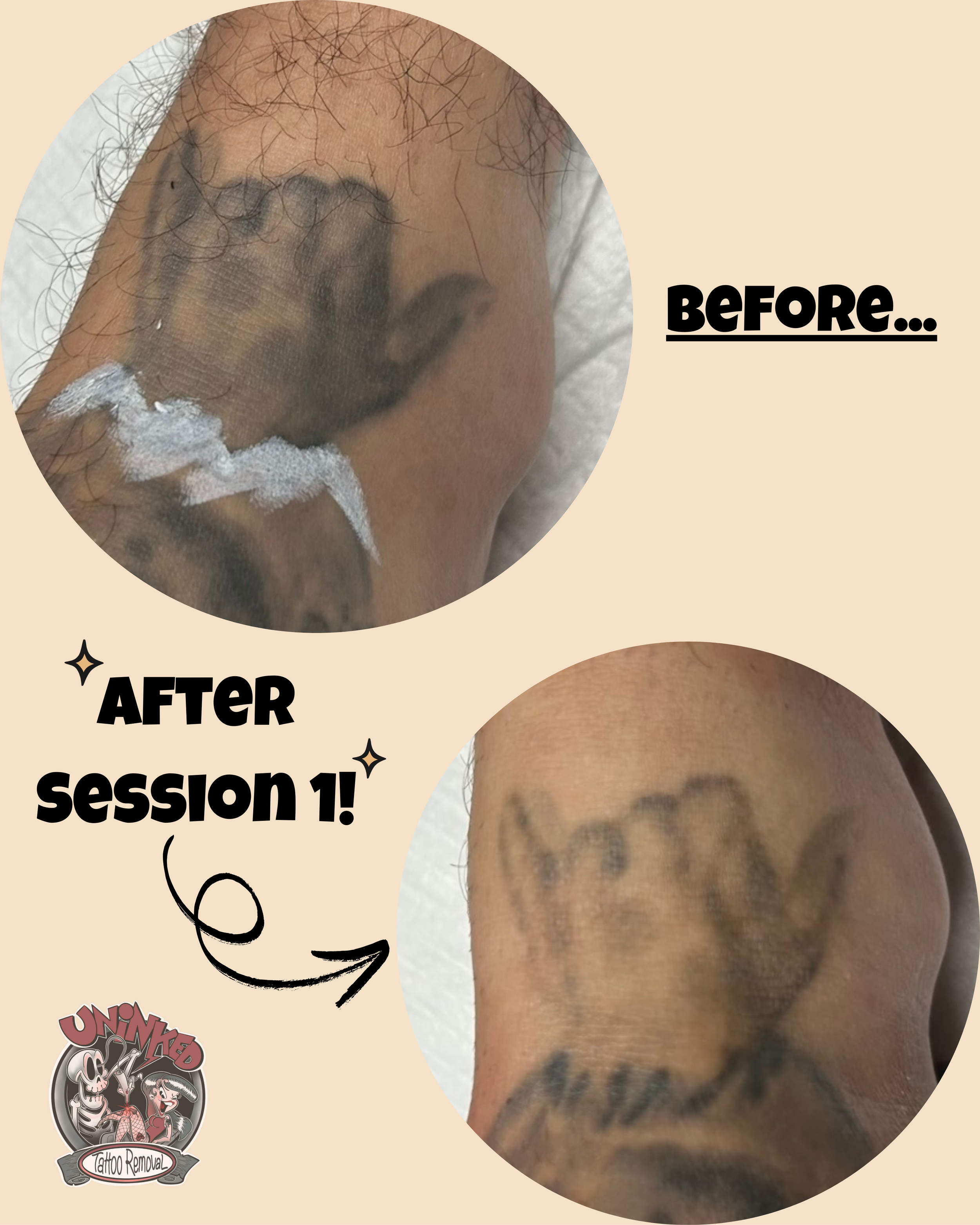
This ankle tattoo consisted primarily of shaded black and grey ink without heavy, densely packed outlines. After one treatment session, visible lightening and softening of the shaded areas can be seen.
Case 2: Shoulder Tattoo - 10 Days After Session One
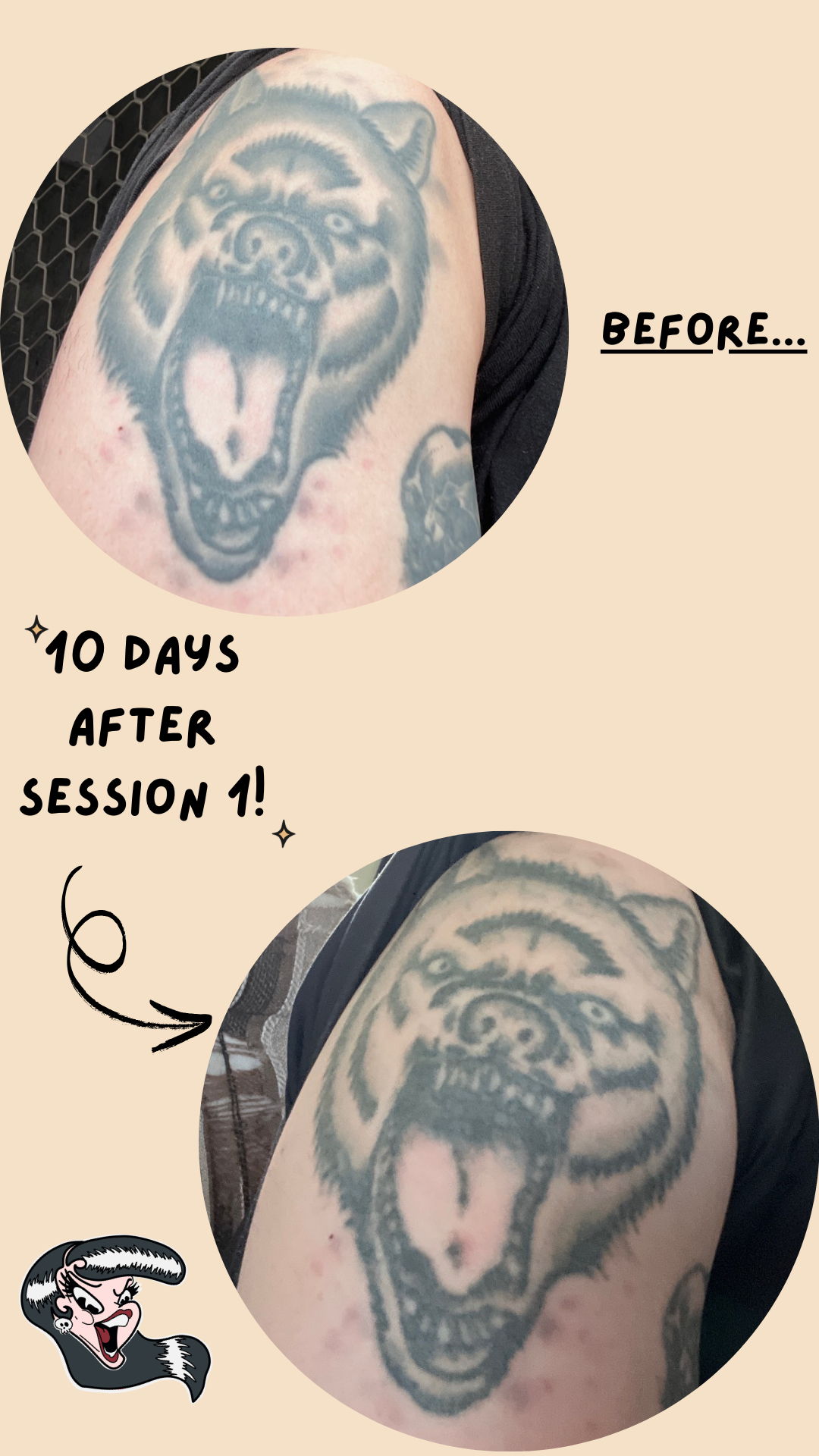
This black and grey bear tattoo is estimated to be over 15 years old. The after image was taken 10 days following the initial treatment. There is clear reduction in contrast throughout the softer shaded regions, particularly in the mid tone areas of the face and surrounding fur.
Case 3: Outer Arm - One Session Result
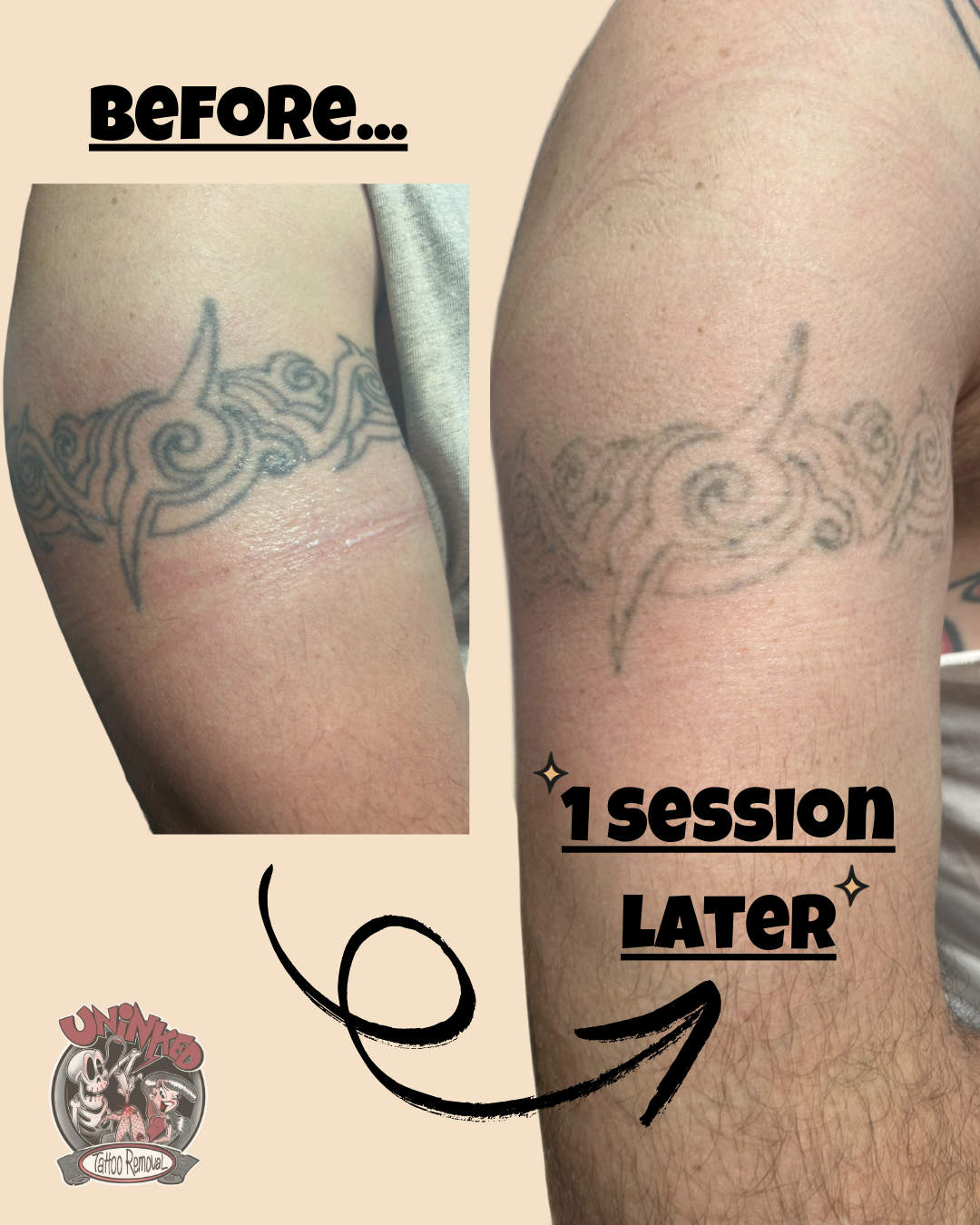
This black ink linework tattoo is over 10 years old and showed visible lightening after a single treatment session. The design consists primarily moderate linework. Following treatment, there is a clear reduction in contrast throughout the lines, indicating effective fragmentation of the ink particles.
Conclusion
Tattoo removal is not determined by a single factor. It is the interaction between the laser, the characteristics of the tattoo, and the biology of the individual.
The examples shown above demonstrate that early fading is possible, particularly in older tattoos or areas with lighter saturation. They also show how denser regions fade more gradually, even within the same piece.
There is no universal timeline. Two people with similar tattoos can experience different rates of fading because no two immune systems function identically.
Understanding this helps set realistic expectations. Tattoo removal is a cumulative biological process. Each session builds on the previous one, and consistent spacing allows the body to do its work.
While we can provide an informed estimate during consultation, the most accurate indication of how a tattoo will respond is observed after the first treatment, once we see how your skin and immune system react.